

IoT Security Testing (VAPT)
Features
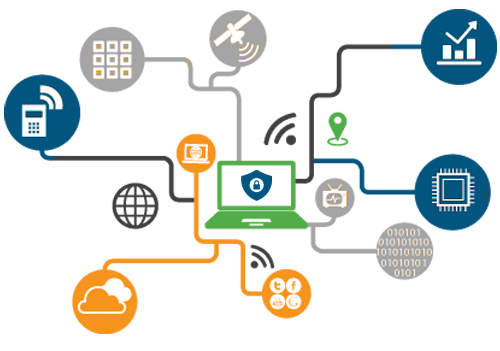
IoT and IIoT systems are convergence of large amount of end points & applications from variety of sources with various models of communication involved into it. The complexity increases with -
- Device to device communication
- Device to gateway communication
- Device to cloud communication and
- Back end data sharing
What are the main concerns regarding IoT deployment?
Main issues organizations facing are related to Security, Privacy and Regulations. These issues are the effect of human negligence or errors in configuration, not covering security aspects during design & development, Insufficient technical & process controls for data security, low adherence to standards & regulations and presence of inherent vulnerabilities in the legacy systems & devices. These weaknesses give hackers enough ammunition to exploit the vulnerabilities.
Which are the major security issue?
How the vulnerabilities get exploited?
Majority of the times the aim of cyber attacks is to take control of the system, steal information and disrupt the services of the organization making them to pay heavy price. There are various ways the attackers succeed due to various vulnerabilities present in the system. IoT is convergence of sensors, devices, mobile devices, equipments, mobile/web/cloud applications and network infrastructure. This makes IoT more vulnerable to exploit the weaknesses than any other systems. The main attack vectors which could risk your system are hactivists, internal disgruntled employees, enemy state, and competitors.
How the exploitation take place?

Compromising access control
Hackers can gain access to network, devices and applications by guessing the passwords or by breaking it using brute force method. Many devices have no passwords, hard coded passwords or passwords can?t be changed are the easy target to get the control of the devices remotely and access the confidential information or even change the parameters.
Crippling the network services
Attackers can initiate distributed denial of service (DDoS) attack to flood the network and make it unserviceable for the important services and communication.
Malware injection
The attackers can be able to inject the malware through insecure network and components which are poorly configured or lack in basic security. Most of the time firmware of the sensors and devices is not checked and updated leading to easy access to firmware to modify the firmware completely or change the boot loader sequence.
Exploiting applications and interfaces
Mobile, web and back end interfaces are most vulnerable for attacks due to heterogeneous development standards in IoT. Large amount of data comes at risk by SQL injection attacks, cross-site scripting attacks, cross-site request forgery attacks and session control.


Man-in-the-Middle (MitM) attacks
Many devices and systems lack the data encryption which exposes the data in transit and data at rest. The attackers can steal such data which include session identifiers, private information, authentication credentials etc. The attackers can tamper with the critical process parameters transmitted from the sensors and devices.
Improper or weak configuration of network assets like servers, switches, firewalls give easy access and control to the attackers exposing the information in entire network.
Multi tenant cloud infrastructure is serious threat if it doesn?t have proper authentication management and not properly configured. It may expose the application and data to another tenant.
Lack of adherence to regulation and compliance to standard security procedures keep the organization vulnerable to various threats emanating not only through network attacks but also to the phishing, social engineering and even physical attacks.

Why is IoT security weak?
IoT devices often have a single account or privilege level, both exposed to the user and internally. This means that when this privilege is obtained, there is no further access control. This single level of protection fails to protect against several vulnerabilities
What is IoT Security Testing?
IoT Security testing is a process of testing IoT devices to find security vulnerabilities that hackers could exploit to access your network, modify your data, or steal your information.
Can IoT work without Internet?
Not all IoT devices need an internet connection to function properly. But they do require a connection to other gadgets on the network to automate certain tasks, allow you to interact with them via direct commands, or customize their configuration.
Why do we need IoT security?
Hardware, software, and connectivity will all need to be secure for IoT objects to work effectively. Without security for IoT, any connected object, from refrigerators to manufacturing bots, can be hacked. Once hackers gain control, they can usurp the object's functionality and steal the user's digital data.
How to improve IoT security?
Following are a few ways to improve IoT security
- Change default passwords
- Make sure your software is protected
- Defend against IoT identity spoofing
- Use encrypted protocols
What are the largest security challenges in IoT?
5 most common Internet of Things security challenges are
- Software and firmware vulnerabilities
- Insecure communications
- Data leaks from IoT systems
- Malware risks
- Cyberattacks
What are the major key elements in IoT security?
- Device and data security, including the authentication of devices and confidentiality and integrity of data.
- Implementing and running security operations at IoT scale.
- Meeting compliance requirements and requests.
- Meeting performance requirements as per the use case.
What are IoT-based attacks?
An IoT attack is a compromise of an Internet of Things (IoT) system. This can include devices, networks, data, and users. A cybercriminal can launch an IoT attack to steal information. They can take over an automated or IoT system, and shut it down.
What are the common types of attacks on IoT systems?
Most common types of attacks on IoT systems are-
- Denial-of-service attacks
- Denial-of-sleep attacks
- Device spoofing
- Physical intrusion
- Application-based attacks
What is authentication in IoT?
IoT (Internet of Things) Authentication refers to ways to securely and conveniently access connected devices such as smart homes, autos, transportation hubs, and workplaces.
How are IoT devices hacked?
One of the most popular attacks and infection vectors for IoT devices so far is brute-forcing passwords on Telnet and SSH services that are not disabled. After gaining access to these services, attackers can download malware to the device or gain access to valuable information.
How can one secure a smart device?
For securing smart devices, ensure using tamper-resistant hardware. Providing constant patches and updates can result in better product security. To sum up, the following steps are helpful to secure smart devices.
- Ensure tamper-resistant hardware
- Provide patches and updates
- Run thorough testing
- Implement device data protection
- Meet component performance requirements
How to secure IoT networks?
For securing IoT networks-
- Ensure strong authentication
- Enable encryption and secure communication protocols
- Minimize device bandwidth
- Divide networks into segments
How to secure data in IoT systems?
To secure data in IoT devices-
- Protect sensitive information- Apply robust authentication to ensure that only valid users have access to data.
- Collect only necessary data- Ensure that the device only collects the required data and nothing extra to it. This reduces the risk of data leakage.
- Secure network communications- Restrict unnecessary communication within the IoT network. Establish proper firewalls where required and follow encryption on data transferred.
Why do IoT devices pose a cybersecurity risk?
IoT devices produce immense volumes of various types of data that are stored, managed, and shared within an organization's IT infrastructure. Hence, they add to the risk landscape in more ways than one with respect to cybersecurity, third-party risk, and compliance with data protection regulations.
What Our Customers Say?
Valency Networks is a very techie company, focusing on a continuous improvement in service quality. Our customers like us exactly for that and that helps us keep our quality to the best extent.

Valency Networks is our only preferred vendor because the way they find vulnerabilities in our network is par excellence. We hired them on a long term contract to top up our perimeter and wish to continue with them.

Hardly goes a day when I have not learnt anything new in cyber security space and IT technologies.

Working at Valency Networks helps me gain great knowledge everyday.